
Three Women, One House, Zero Trace: The Springfield Three
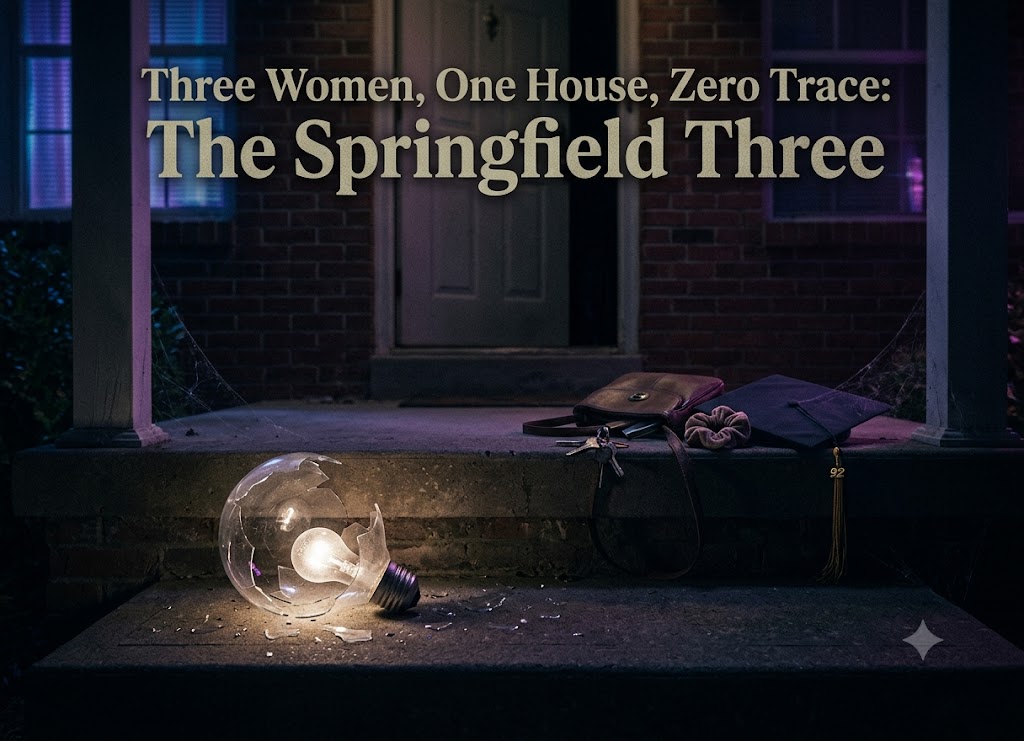
In the early morning hours of June 7, 1992, three women stepped into a void and never came back. Sherrill Levitt, her 19-year-old daughter Suzie Streeter, and Suzie's best friend, 18-year-old Stacy McCall, vanished from a quiet home in Springfield, Missouri, leaving behind a mystery that would haunt the city for over three decades.
The Night Before Everything Changed
It was supposed to be a celebration. Fresh off a high school graduation, the girls had made simple plans: spend the night together, wake up, and head to a waterpark the next day. The kind of ordinary plans that close friends make all the time. The kind of plans that should have a normal ending.
But nothing about what happened next was normal.
The Morning That Revealed Nothing
When friends arrived at the house on June 7, they encountered something deeply wrong—not through dramatic evidence, but through absence. The cars were still in the driveway. The family dog was waiting inside, alive and accounted for. The women's purses, keys, and clothes were all left behind. No one had packed a bag. No one had planned to leave.
The only physical clue was subtle, almost easy to miss: a single shattered glass globe on the front porch light, the bulb still burning bright in the morning sun.
That broken globe would become one of the most analysed details in true crime history. What caused it? A struggle? A forced entry? An accident? It remains a fragment of truth in a case defined by fragments and silence.
What We Don't Know
The Springfield Three case is unusual because it seems to offer us nothing—no demands, no bodies, no credible sightings, no clear motive. Three people vanished from a locked house, leaving behind the detritus of normal life. The family dog. The unfinished plans. The clothes in the closet. The purses on the counter.
The contamination of the crime scene by well-meaning friends who arrived looking for them only deepened the mystery. In those crucial early hours, before police officially knew this was a crime scene, the house was walked through, touched, and altered. Evidence—if there ever was any—became muddied.
The Questions That Won't Rest
Thirty-three years later, we're still asking the same questions that haunted investigators in 1992. Who took them? How did three people disappear without a trace? Were they taken by force, or did something happen that made them leave willingly—a possibility that seems almost impossible given everything they left behind?
The absence of answers is its own kind of torture. In true crime, we often have a body, a suspect, a motive, a thread to pull. The Springfield Three gives us none of these things. It gives us a broken globe, a locked house, and three people who simply ceased to exist.
For the After Darkers
This is the kind of case that stays with you—not because of gore or dramatic details, but because of what it represents: the fragility of safety, the impossibility of certainty, and the way evil can move in the darkness without leaving behind the kind of evidence that would let us understand what happened.
Sherrill, Suzie, and Stacy deserve more than a cold case file. They deserve answers. If you have any information about what happened to them, the Springfield Police Department can be reached at 417-864-1810 or through Crime Stoppers.
The darkness held onto them on that June morning in 1992. But we haven't forgotten. We won't stop asking questions.
Until next time, After Darkers—stay curious, stay safe, and remember: sometimes the most terrifying mysteries are the ones where the truth is still waiting to be found.

The Midnight Disappearances: Why Cold Cases Haunt the After Dark Hours